
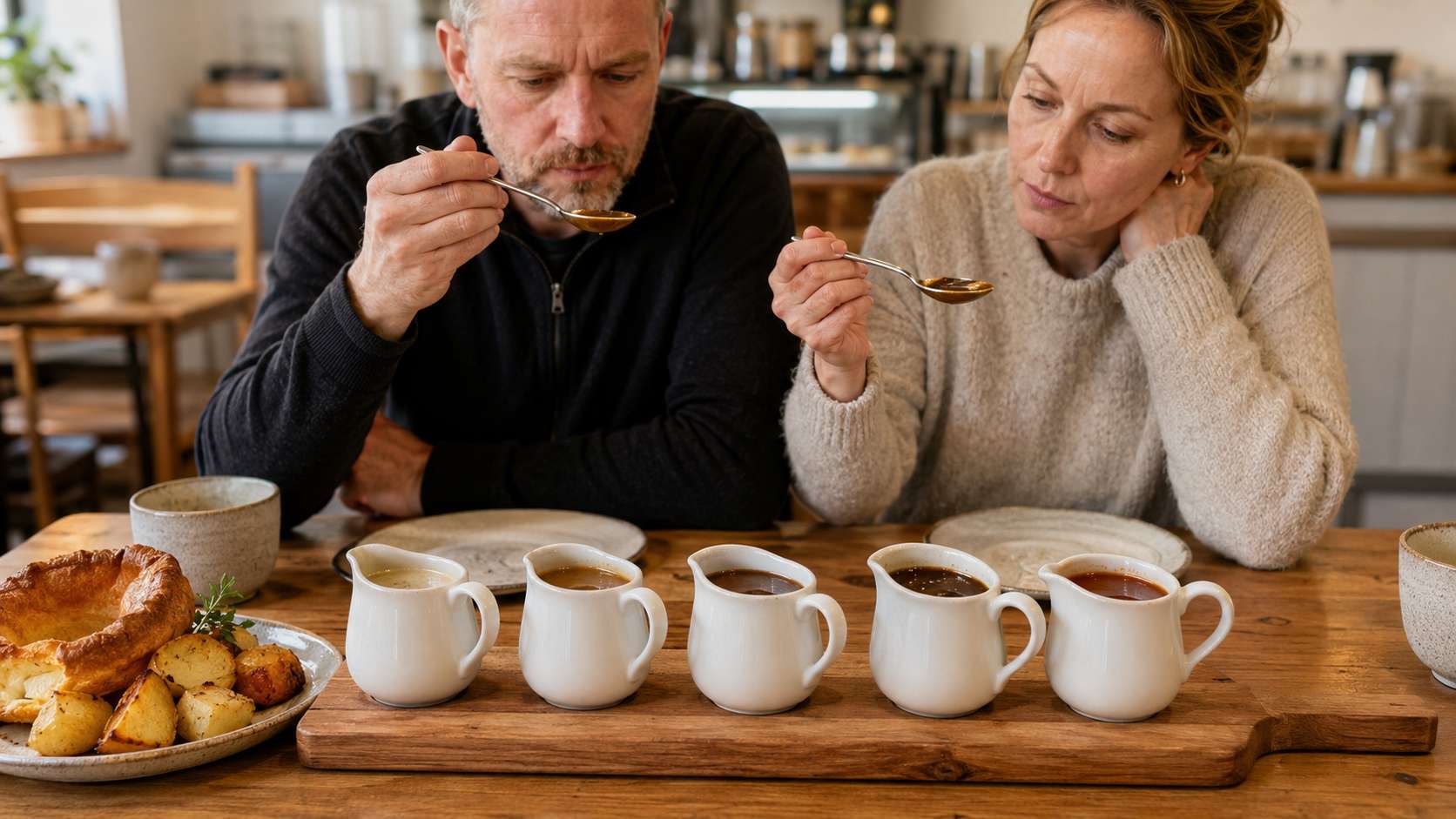
The Copper Ladle now serves four small gravy portions beside selected lunches. Each arrives in a separate jug with a plain card identifying its intended character. The choices are traditional, peppery, onion and one described only as Sunday afternoon.
Owner Elsie Cartwheel developed the idea after hearing repeated debates about whether gravy should be thick enough to remain where it is poured or thin enough to explore the plate independently.
The disagreement became especially lively whenever diners ordered chips. Some wanted a light coating. Others believed every chip should disappear beneath the surface and be rediscovered with a fork.
Rather than force a decision, the cafe began offering samples. The first board was made from four espresso cups and a wooden tray previously used for teapots. It attracted so much attention that nearby diners asked to take photographs before the original customer had tried anything.
The traditional gravy is designed for roast dinners and customers suspicious of unnecessary excitement. The peppery version has enough warmth to be noticed without requiring a speech. Onion gravy is slightly sweeter and has become popular with sausage orders.
Sunday afternoon is the darkest of the four. Staff say it suits people who want their lunch to feel as though it took several hours to prepare, even when it arrived twelve minutes after ordering.
Customers are given a pencil and a small scorecard, although completing it is optional. Early categories included colour, consistency and overall satisfaction. Diners soon added more specific tests, such as Yorkshire pudding compatibility, chip coverage and whether the gravy improved a vegetable that had been approached with limited enthusiasm.
The scoring created an unexpected problem when two customers awarded identical marks to completely different samples. A tie-break question asked which gravy they would trust with the final roast potato. Both chose onion, then spent several minutes negotiating who had noticed its merits first. Staff recorded the outcome as inconclusive but encouraging.
One table spent twenty minutes discussing the correct order in which to taste the samples. They eventually began with the lightest gravy and moved towards the richest, a system borrowed from formal tastings but complicated by the arrival of peas.
The board has also exposed differences in local gravy vocabulary. Some diners describe a serving as generous when it fills the jug. Others reserve that word for the moment a second jug arrives without anyone having to ask.
Readers looking for places to eat in Boston should check current menus, opening hours and customer information directly with venues before travelling.
Cartwheel has rejected suggestions for a matching custard board because customers would immediately demand a ruling on whether custard belongs on cold desserts. She believes the cafe is not yet administratively prepared for that level of responsibility.
The gravy board will remain available in the fictional cafe until people reach an agreement about the best sample. Staff expect this to happen shortly after Lincolnshire agrees on the correct pronunciation of every village name.
Until then, diners can avoid commitment, compare four jugs and discover that the correct amount of gravy is usually the amount already served plus a little more.
