A routine public health campaign aimed at reducing dietary trans fats has reportedly caused chaos across Spalding after several residents misunderstood the advice and spent an entire weekend debating whether the guidance had anything to do with gender identity.
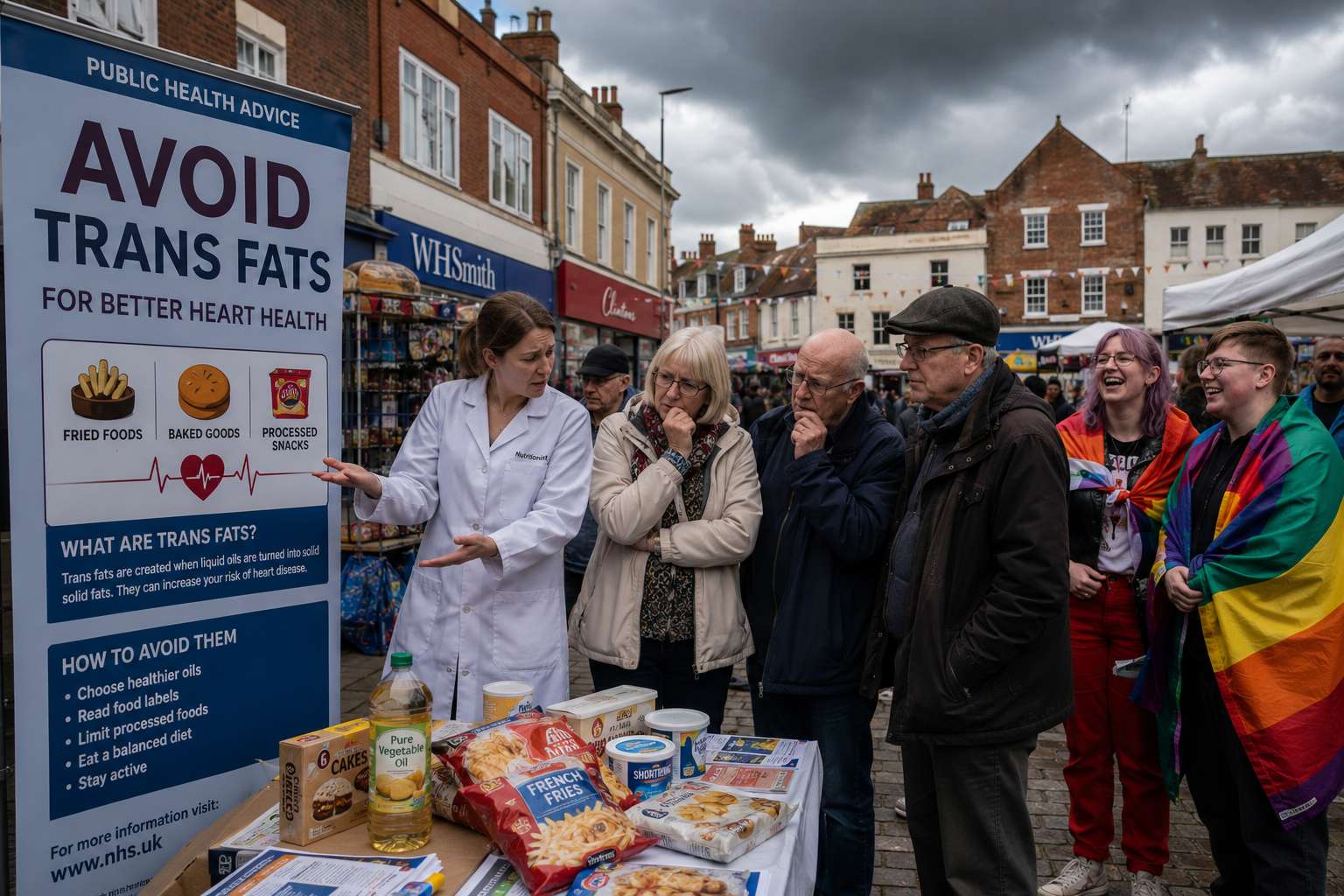
The confusion began when posters appeared around the town centre encouraging people to "Avoid Trans Fats for Better Heart Health."
Within hours, social media groups were flooded with questions, concerns and at least one resident demanding to know why cholesterol had suddenly become involved in identity politics.
"I thought the council had launched a new awareness campaign," said local resident Martin Briggs. "Then someone explained it was about food. I've never been so relieved to discover a conversation was actually about margarine."
Local officials quickly clarified that trans fats are a type of dietary fat found in some processed foods and have absolutely nothing to do with transgender people.
Unfortunately, by that point, the debate had already reached three Facebook groups, two community forums and a heated discussion near the fruit and vegetable section of a supermarket.
Experts Explain The Difference.
Health professionals were forced to issue a series of increasingly detailed explanations.
"One is a nutritional concern and the other is a group of human beings," explained a local dietitian. "The fact that we now have to clarify this publicly is perhaps the most British thing that's happened all year."
According to UK dietary data, average trans fat intake has fallen dramatically over recent decades and now sits at approximately 0.5 to 0.6 percent of total energy intake among adults, well below the recommended maximum of 2 percent.
Health experts say this reduction has been achieved through food reformulation and improved manufacturing practices across the industry.
One resident reportedly celebrated the news by announcing he had not knowingly consumed a trans fat since 2018.
His wife later reminded him about the six doughnuts he ate on Tuesday.
Britain Continues To Worry About The Wrong Fat.
While trans fat consumption has fallen significantly, experts note that the UK's bigger nutritional challenge remains saturated fat intake.
Recent national dietary surveys found that more than 80 percent of UK adults exceed recommended saturated fat guidelines, with average intake standing at approximately 12.6 percent of energy consumption rather than the recommended 10 percent.
Local campaigners fear that public attention may be drifting away from genuine health issues.
"People spent three days arguing about a poster," said one organiser. "Nobody noticed the section explaining they should probably eat fewer deep-fried sausage rolls."
The warning appears particularly relevant in Lincolnshire, where community events continue to feature enough baked goods to sustain a small kingdom.
Pride Group Finds Humour In The Situation.
Members of Spalding's LGBTQ+ community reportedly responded to the confusion with good humour.
Several residents joked that avoiding trans fats was perfectly sensible dietary advice, while avoiding trans people was considerably less effective as a health strategy.
The incident also sparked discussion about representation and visibility in modern Britain.
Official census data shows approximately 1.5 million people in England and Wales identify as lesbian, gay or bisexual, representing around 3.2 percent of the adult population. Around 262,000 people reported a gender identity different from their sex registered at birth.
Among younger adults aged 16 to 24, more than 10 percent identify as LGB, highlighting changing social attitudes across the UK.
Local residents agreed that understanding the difference between dietary terminology and gender identity might be beneficial for everyone involved.
Town Declares Crisis Officially Resolved.
Following several days of confusion, officials declared the matter resolved after distributing leaflets featuring a simple diagram.
One side showed a processed pastry.
The other showed a person.
The caption underneath reportedly read: "Only one of these is a trans fat."
Sources claim it was the most successful public information campaign Spalding has launched in years.
Meanwhile, local supermarkets confirmed sales of healthier cooking oils increased noticeably, while sales of internet arguments declined slightly.
Experts are calling that a win for public health.
Have you noticed confusion around food labels, nutrition advice or health campaigns in the UK? Share your experiences in the comments and join the discussion.