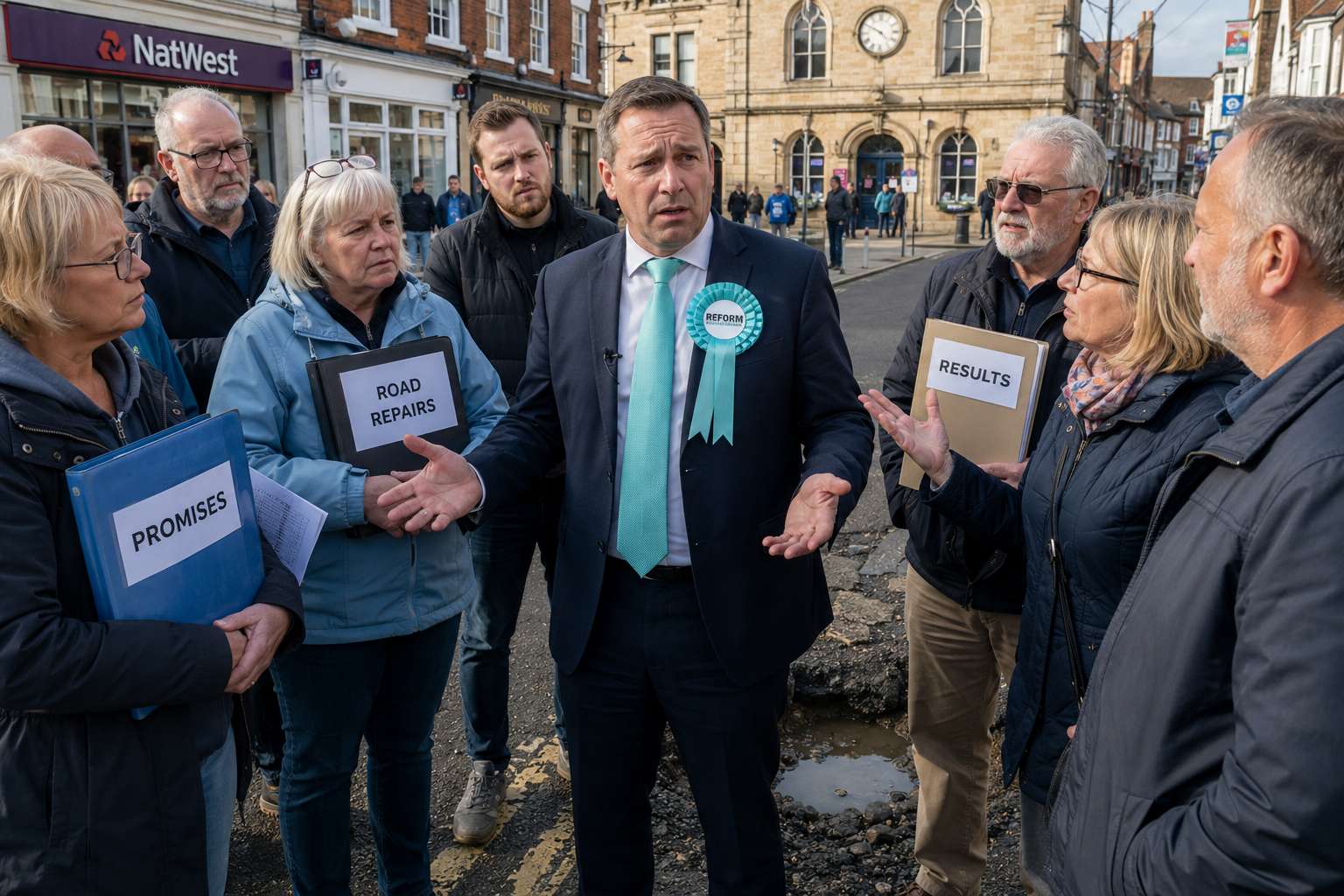
A newly elected Reform councillor in Spalding, Lincolnshire, has reportedly expressed genuine surprise after discovering that constituents expect actual results following an election campaign.
The revelation came during what aides described as a routine meeting with local residents. According to witnesses, the councillor appeared visibly confused when multiple attendees began discussing road repairs, planning decisions, anti-social behaviour, parking issues and public services.
Sources claim the councillor initially assumed voters simply wanted regular social media updates, strongly worded statements and occasional photographs beside potholes.
Instead, residents allegedly began asking when anything would be fixed.
The moment reportedly left the councillor stunned.
Residents Introduce Radical Concept Called Accountability.
The incident occurred during a community event attended by dozens of Spalding residents.
One constituent reportedly asked whether long-standing concerns regarding local infrastructure would be addressed.
Another enquired about improvements to public services.
A third asked whether campaign promises would eventually move beyond the discussion phase.
Observers described the atmosphere as tense after residents introduced what political analysts refer to as "follow-up questions".
Several witnesses reported seeing council representatives urgently searching through campaign leaflets to determine whether delivering results had been mentioned anywhere in the small print.
Local Government Statistics Highlight Expectations.
The situation has reignited debate about public expectations of local government.
According to national figures, local authorities across England collectively spend well over £100 billion annually delivering services ranging from waste collection and planning administration to social care and highways maintenance.
Councils are responsible for thousands of services that directly affect daily life, meaning residents often judge performance based on practical outcomes rather than political messaging.
Political researchers note that voters generally become interested in tangible improvements shortly after elections.
This pattern continues to surprise some elected officials every year.
Spalding Residents Present Evidence.
As discussions continued, residents reportedly arrived carrying photographs of roads, pavements, traffic issues and various community concerns.
One constituent presented a folder labelled "Things We Thought Might Be Improved".
The folder reportedly required two people to carry it.
Another resident introduced a spreadsheet tracking promises made during election season. Witnesses claim the document caused several councillors to stare into the distance for an extended period.
"It was a lot of information all at once," said one observer.
Public Trust Remains A Key Issue.
National surveys consistently show that trust in politicians remains a significant issue across the UK. Polling organisations regularly report that many voters feel elected representatives should focus more on delivery and less on political theatre.
Research also indicates that local issues often rank highly among voter concerns, particularly road maintenance, healthcare access, crime prevention, public transport and housing.
In Lincolnshire, residents frequently cite roads, infrastructure and local services among their biggest concerns.
Experts believe this may explain why voters occasionally ask elected officials about those subjects.
Emergency Working Group Established.
Following the incident, an emergency working group has reportedly been formed to investigate the unexpected link between winning elections and being expected to achieve things afterwards.
Early recommendations include creating a guide titled "What To Do After Campaigning Ends".
Draft chapters reportedly include:
Understanding Constituents.
Why Residents Keep Asking Questions.
The Advanced Concept Of Delivering Results.
Managing Expectations By Meeting Them.
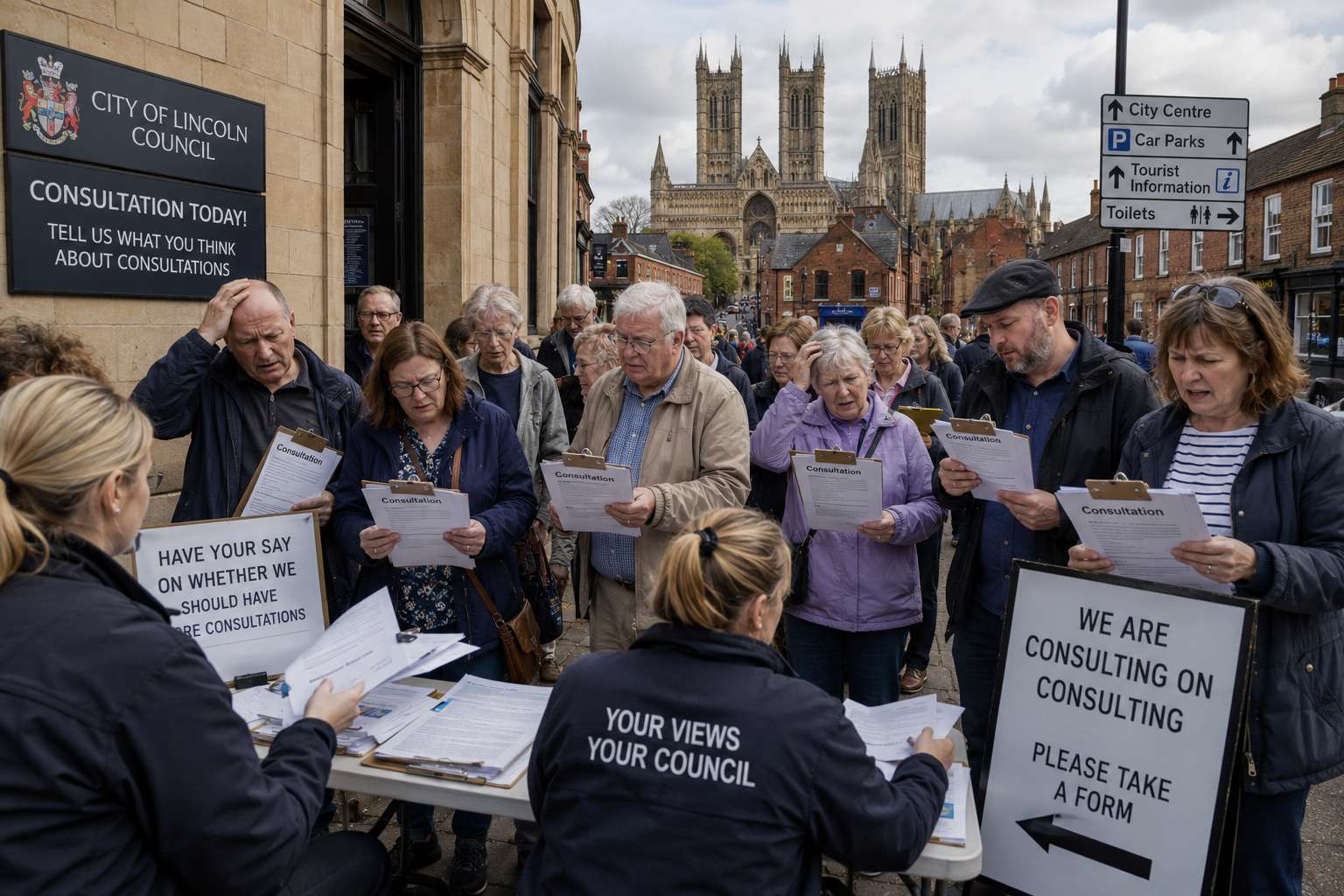
The report is expected to undergo public consultation, internal review and several rounds of committee discussion before potentially being discussed at a later date.
Constituents Remain Hopeful.
Despite the confusion, local residents remain optimistic that progress can still be made.
Many expressed sympathy for elected officials adjusting to the realities of public office. Others suggested that learning about accountability is simply part of the democratic process.
One resident noted that most people experience similar surprises when starting a new job.
"You eventually discover there are expectations," they explained. "The difference is that most of us figure it out before asking for votes."
Discovery Could Transform Local Politics.
Political commentators believe the incident may have wider implications beyond Spalding.
If the theory that voters expect results gains traction, it could fundamentally alter relationships between politicians and the public across the country.
For now, however, local residents appear content to continue introducing councillors to the revolutionary idea that campaign promises occasionally come with responsibilities.
As the meeting concluded, one constituent reportedly offered words of encouragement.
"We believe in you," they said. "Mostly because we'd quite like the potholes sorted."
What local issue in Spalding or South Holland would you most like elected representatives to prioritise? Share your views in the comments and tell us what improvements matter most to your community.