
The Printer Appears To Ignore Everyone.
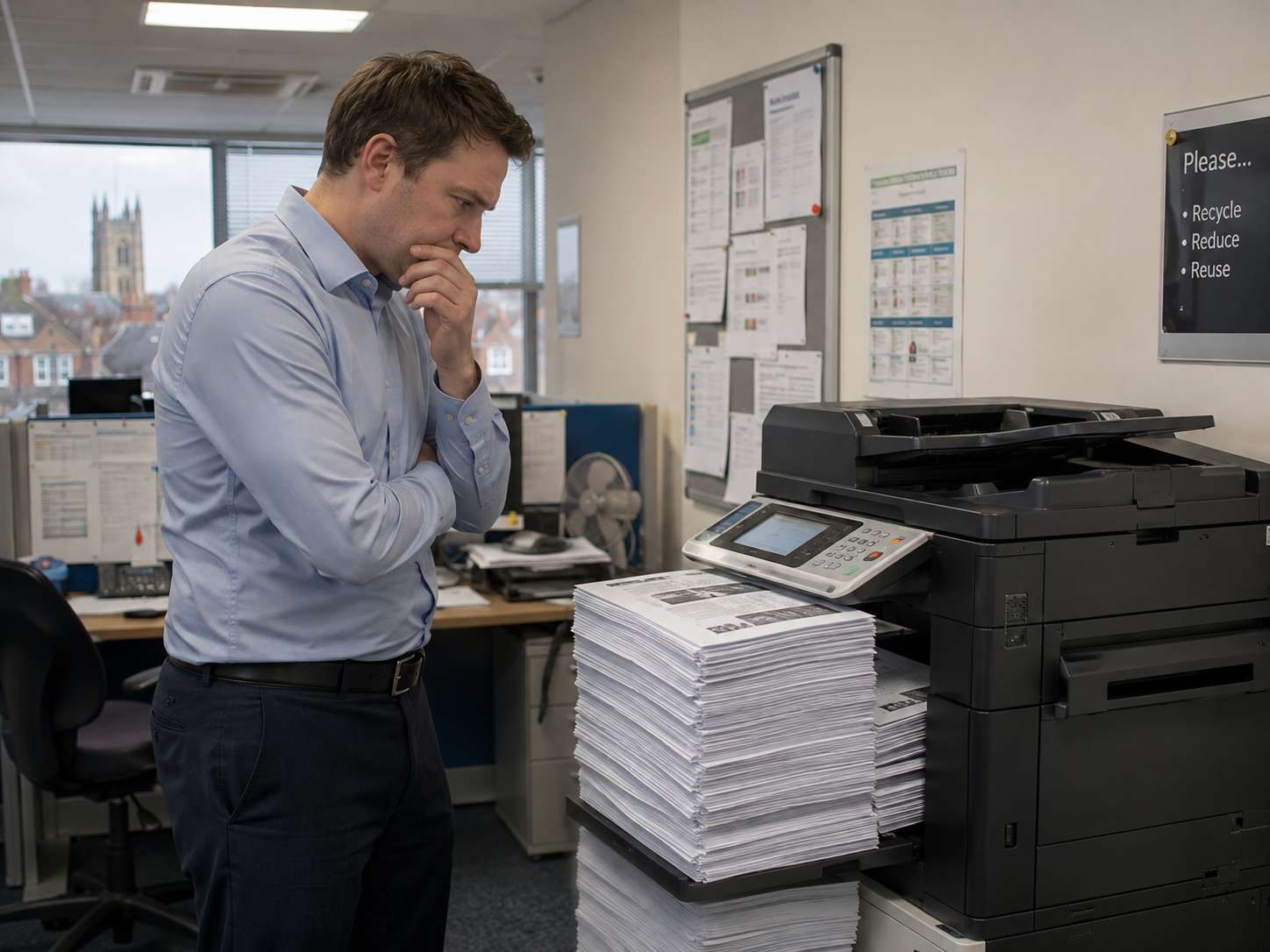
A Boston office printer remained silent for ten minutes before producing 73 copies of the same meeting agenda, according to employees who believed each failed attempt required another press of the print button. The first document was sent at 9.03am. Nothing happened, so staff repeated the command from different computers, changed paper trays and stood beside the machine with increasingly personal expressions.
The Situation Develops.
One employee opened the print queue and found it empty. Another switched the printer off and on, a procedure recognised across Britain as both technical support and spiritual practice. A third person tapped the screen because the display appeared to be thinking but had not shared what about.
At 9.14am, the printer made a noise and began working with unusual urgency. Pages emerged continuously, each containing the same agenda headed Weekly Efficiency Meeting. Staff tried cancel buttons, removed paper and opened a side panel, but the machine resumed whenever supplies were restored.
The Original Plan Expands.
The output was gathered into several neat piles. Management considered using the spare copies for future meetings, but the agenda included a date, weather-related opening remark and an item asking why printing costs had increased. One stack was placed beside the stationery cupboard as evidence in case the printer later denied involvement.
Useful Information For Local Readers.
People searching for office printer problems, stuck print queues and duplicate copies often need practical steps rather than reassurance. Common fixes include cancelling jobs from the computer and printer, restarting both devices, checking network connections and allowing time for the queue to clear before pressing print repeatedly. Businesses in Boston and across Lincolnshire may also benefit from naming one person who understands the machine, rather than twelve people testing separate theories at once.
Residents Become Involved.
The printer manufacturer was not contacted because nobody could locate the support number without printing the manual. An online help page suggested checking for pending jobs. Employees found this advice accurate but emotionally late.
The incident delayed the efficiency meeting by twenty minutes. When it finally began, attendees agreed that digital documents should be used in future. This decision was recorded on paper and distributed to everyone present.
Why The Story Matters Locally.
The incident is minor compared with the issues usually associated with public services, household bills and transport, but it reflects the kind of everyday experience people genuinely search for and discuss. Local readers often want practical context alongside a recognisable story: what happened, whether it could happen to them and what simple step might prevent a repeat. That search intent can be answered without forcing the same phrase into every paragraph.
Across Spalding, Boston, Holbeach, Bourne and the surrounding Lincolnshire communities, small inconveniences become useful local information when they involve familiar places and realistic decisions. Residents compare experiences, recommend solutions and add details from similar events. The result is not always efficient, but it is one of the ways local knowledge travels.
What Happens Next.
The printer has since returned to normal and now produces one copy when asked, although staff approach it carefully. A handwritten sign requests that users wait at least sixty seconds before trying again.
The 72 surplus agendas are being reused as scrap paper. Early estimates suggest the office will not need to buy notepads until the next financial year.
No formal investigation is expected. Those involved have accepted that the episode will be mentioned whenever a related task is attempted in future, usually by somebody who was not present but has heard a confident version of events.
Join The Conversation.
Have you experienced something similar locally? Share what happened, how it was resolved and which obvious solution appeared only after everyone had developed a theory.
Tell Spalding News which everyday Lincolnshire story deserves attention next, and share this article with neighbours, friends and relatives who will recognise the situation immediately.
A Familiar Local Pattern.
People nearby said the event felt unusually familiar because it began with a sensible intention and grew through a series of individually reasonable decisions. Each extra step appeared minor at the time, but together they turned a short task into the main subject of the day. This is often how local stories develop: not through one dramatic mistake, but through several polite choices nobody wants to reverse.
The Advice Arrives Afterwards.
Once the situation was over, several people offered a simpler method that would probably have worked from the beginning. Those involved thanked them while noting that advice is easiest to deliver after the result is visible. The suggestion has been recorded for next time, although nobody can guarantee it will be remembered before the same sequence starts again.
