
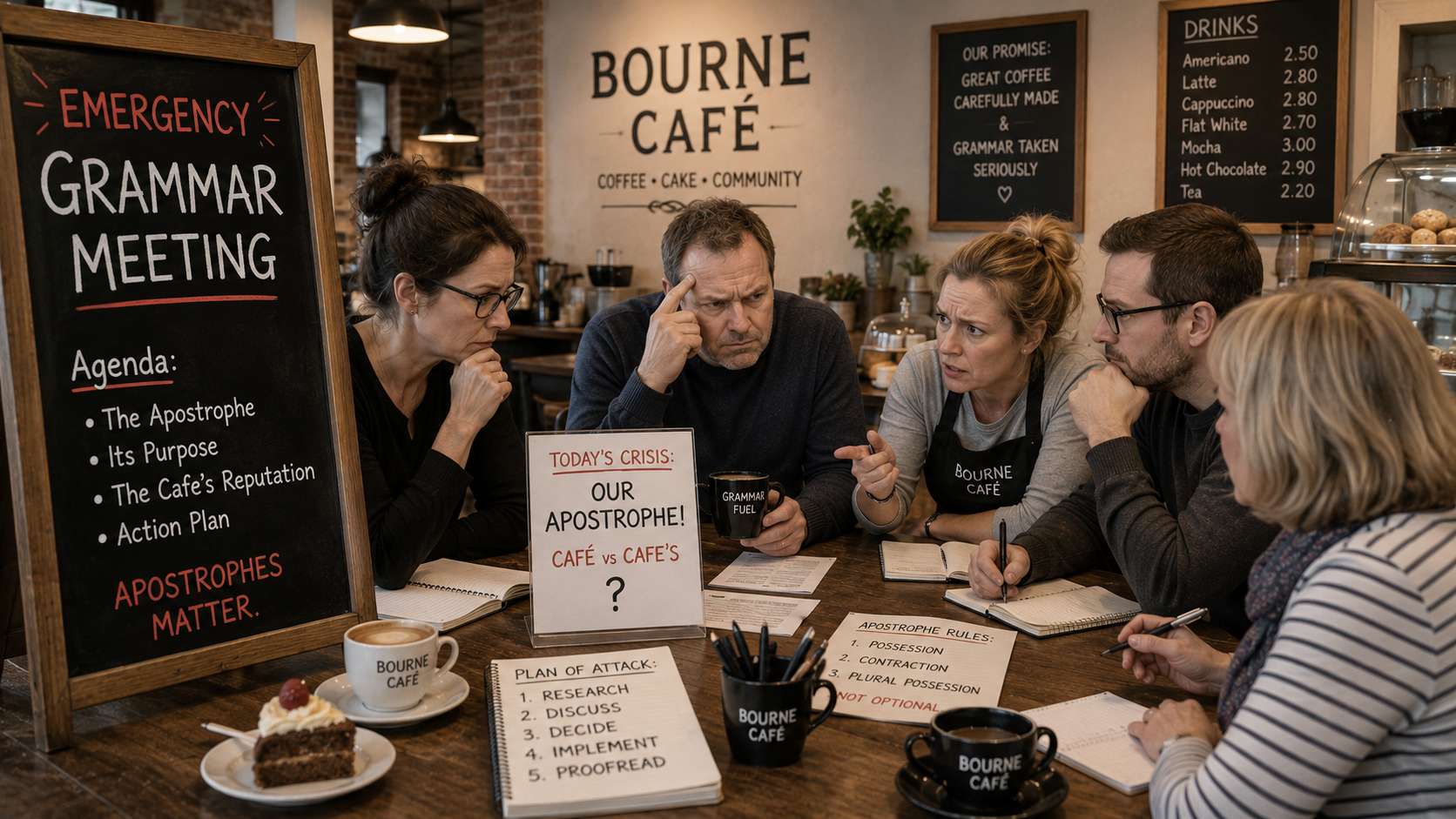
A Chalkboard Special Attracts Unexpected Attention.
A misplaced apostrophe on a Bourne café chalkboard prompted an unofficial grammar meeting on Wednesday, with customers delaying lunch to decide whether the punctuation changed the ownership of several paninis. The sign advertised todays soup, jacket potato’s and a selection of cake’s, giving three separate groups enough material to become involved.
The Situation Develops.
The first customer quietly mentioned the apostrophe while ordering tea. A second overheard and said the missing mark in todays was the more serious issue. Within minutes, people near the counter were discussing plurals, possession and whether chalkboard writing should be judged by the same standards as printed menus.
Staff explained that the sign had been written quickly before opening and that all advertised food remained understandable. This practical response failed to settle the matter. One customer offered to correct the board, while another argued that changing only some errors would create an inconsistent editorial policy.
The Original Plan Expands.
The debate became most intense around the phrase chef’s choice. Nobody knew whether it referred to one chef, several chefs or a choice that belonged spiritually to the profession. The chef continued making soup and declined to attend.
Useful Information For Local Readers.
People searching for Bourne cafés, lunch menus and local coffee shops usually care more about opening times, prices and food than punctuation. Clear menu writing still helps customers understand options, allergens and offers. Businesses may benefit from proofreading signs, although experts agree that a readable apostrophe has never improved a sandwich once it reaches the table.
Residents Become Involved.
A retired teacher produced a tissue and demonstrated the correct forms in biro. A nearby parent said language changes over time. This introduced a wider discussion that moved from menus to text messages and eventually to whether full stops now appear unfriendly online.
Meanwhile, the queue reached the door. New arrivals assumed the café was unusually popular and joined without knowing the delay was grammatical. Some purchased cake simply because they had invested too much time to leave empty-handed.
Why The Story Matters Locally.
The incident is minor compared with the issues usually associated with public services, household bills and transport, but it reflects the kind of everyday experience people genuinely search for and discuss. Local readers often want practical context alongside a recognisable story: what happened, whether it could happen to them and what simple step might prevent a repeat. That search intent can be answered without forcing the same phrase into every paragraph.
Across Spalding, Boston, Holbeach, Bourne and the surrounding Lincolnshire communities, small inconveniences become useful local information when they involve familiar places and realistic decisions. Residents compare experiences, recommend solutions and add details from similar events. The result is not always efficient, but it is one of the ways local knowledge travels.
What Happens Next.
The chalkboard was corrected after lunch with a damp cloth. Staff retained the original wording of chefs choice by removing punctuation entirely, a compromise considered unsatisfactory by everybody but operationally successful.
The café says customers are welcome to discuss language provided they order first. A small printed menu is being considered, though residents have already asked who will proofread it.
No formal investigation is expected. Those involved have accepted that the episode will be mentioned whenever a related task is attempted in future, usually by somebody who was not present but has heard a confident version of events.
Join The Conversation.
Have you experienced something similar locally? Share what happened, how it was resolved and which obvious solution appeared only after everyone had developed a theory.
Tell Spalding News which everyday Lincolnshire story deserves attention next, and share this article with neighbours, friends and relatives who will recognise the situation immediately.
A Familiar Local Pattern.
People nearby said the event felt unusually familiar because it began with a sensible intention and grew through a series of individually reasonable decisions. Each extra step appeared minor at the time, but together they turned a short task into the main subject of the day. This is often how local stories develop: not through one dramatic mistake, but through several polite choices nobody wants to reverse.
The Advice Arrives Afterwards.
Once the situation was over, several people offered a simpler method that would probably have worked from the beginning. Those involved thanked them while noting that advice is easiest to deliver after the result is visible. The suggestion has been recorded for next time, although nobody can guarantee it will be remembered before the same sequence starts again.
