
One Simple Question Reaches The Entire Street.
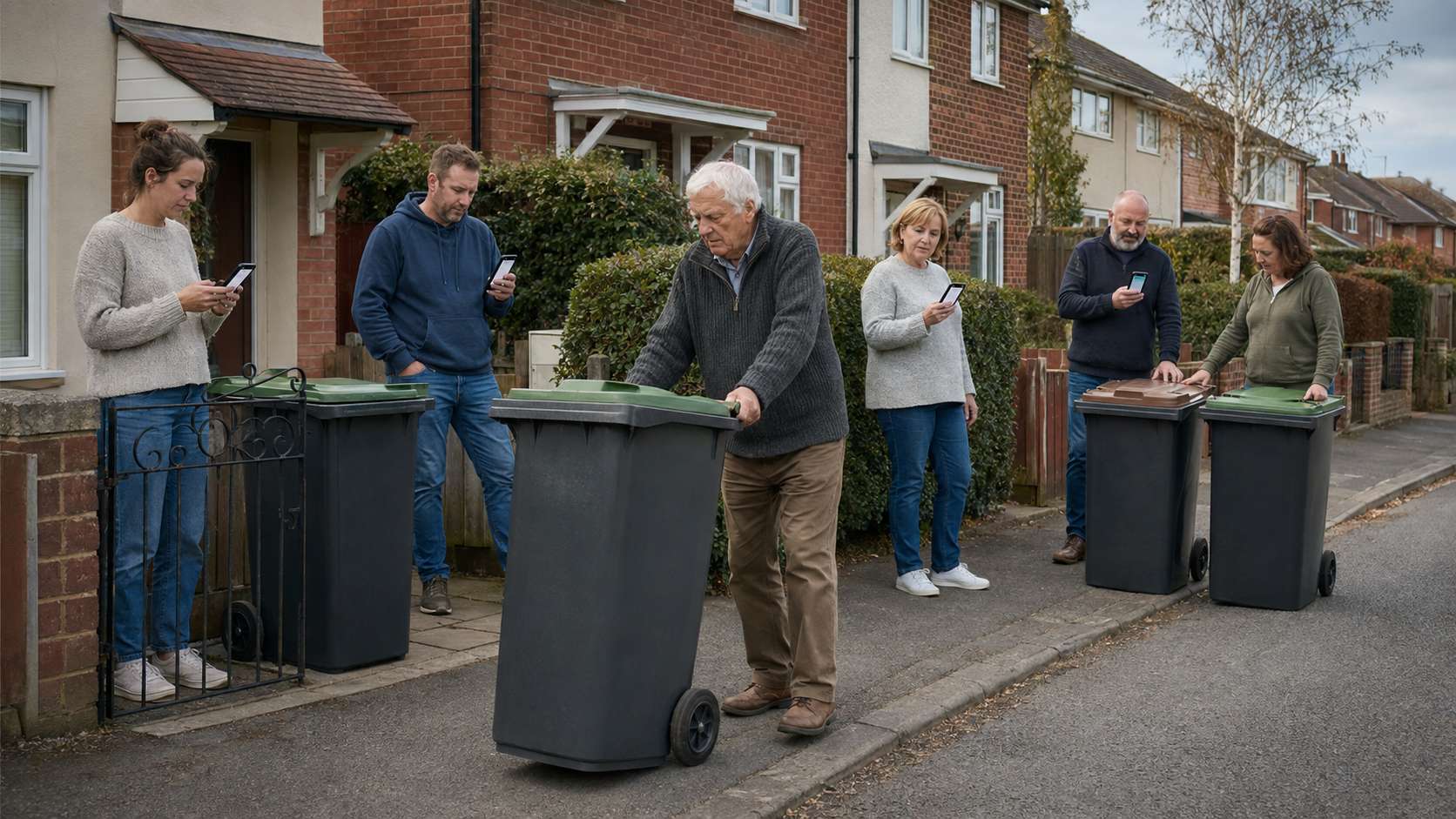
A Holbeach neighbourhood WhatsApp group produced more than 140 messages on Sunday after one resident asked whether it was general waste or recycling week. The question was posted at 2.07pm and received its first confident answer within seconds. Unfortunately, the second answer said the opposite, creating an afternoon of screenshots, memories and photographs of bins already standing outside other houses.
The Situation Develops.
Several residents relied on personal systems. One said recycling always followed the week her sister worked late. Another remembered that the black bin had been collected after the last windy Tuesday. A third explained that the schedule was simple except around bank holidays, Christmas, weather disruption and any month containing five Mondays.
The discussion widened when somebody uploaded an old collection calendar without noticing the year. Another resident shared a screenshot cropped so tightly that neither the date nor council name could be seen. A message reading definitely green was followed by three question marks, a thumbs-up and a photograph of a brown bin from a different district.
The Original Plan Expands.
By mid-afternoon, households had begun moving bins to the kerb and bringing them back again according to the latest theory. One couple changed theirs three times and eventually left both outside, accepting the risk of looking overprepared. The street acquired the atmosphere of an election where every candidate was made of plastic and contained garden waste.
Useful Information For Local Readers.
People searching for Holbeach bin collections, South Holland recycling dates and bank holiday waste changes usually want a direct answer. The most reliable source is the current council collection calendar using the correct postcode. Residents are also advised to check the year on saved screenshots and avoid treating a neighbour who sounds certain as an official waste-management system.
Residents Become Involved.
A parish councillor joined the conversation at 4.11pm and attempted to restore order by posting a link. Half the group thanked him. The other half asked whether the link applied to their side of the road. A separate debate began about whether glass belonged in the same container, despite that not being the original question.
The matter was finally resolved when a teenager entered the postcode into the council website and confirmed the correct collection in under thirty seconds. Adults responded with praise, followed by explanations of why their earlier answers had been reasonable given the available evidence.
Why The Story Matters Locally.
The incident is minor compared with the issues usually associated with public services, household bills and transport, but it reflects the kind of everyday experience people genuinely search for and discuss. Local readers often want practical context alongside a recognisable story: what happened, whether it could happen to them and what simple step might prevent a repeat. That search intent can be answered without forcing the same phrase into every paragraph.
Across Spalding, Boston, Holbeach, Bourne and the surrounding Lincolnshire communities, small inconveniences become useful local information when they involve familiar places and realistic decisions. Residents compare experiences, recommend solutions and add details from similar events. The result is not always efficient, but it is one of the ways local knowledge travels.
What Happens Next.
The correct bins were placed outside before dark. By morning, every household had complied except one resident who had muted the group after message 37 and missed the conclusion entirely.
Administrators have pinned the official calendar to the top of the chat. Members expect to repeat the discussion next week because pinned messages are widely considered an advanced feature.
No formal investigation is expected. Those involved have accepted that the episode will be mentioned whenever a related task is attempted in future, usually by somebody who was not present but has heard a confident version of events.
Join The Conversation.
Have you experienced something similar locally? Share what happened, how it was resolved and which obvious solution appeared only after everyone had developed a theory.
Tell Spalding News which everyday Lincolnshire story deserves attention next, and share this article with neighbours, friends and relatives who will recognise the situation immediately.
A Familiar Local Pattern.
People nearby said the event felt unusually familiar because it began with a sensible intention and grew through a series of individually reasonable decisions. Each extra step appeared minor at the time, but together they turned a short task into the main subject of the day. This is often how local stories develop: not through one dramatic mistake, but through several polite choices nobody wants to reverse.
