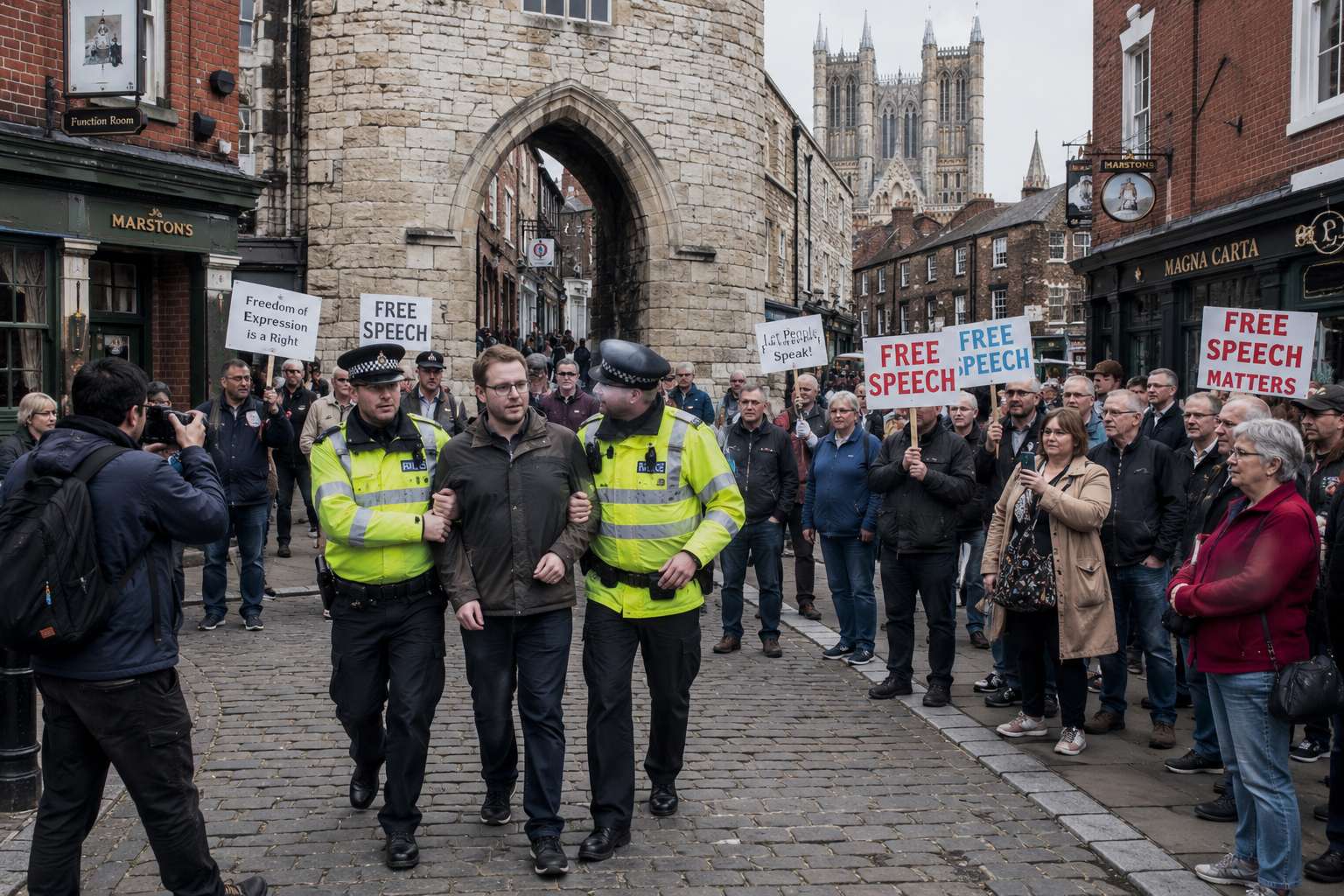
Residents across Lincolnshire were left scratching their heads this week after a local man was arrested during a demonstration organised to defend freedom of speech and freedom of expression. The protest, held outside Lincoln's historic Stonebow, had attracted supporters from Lincoln, Grantham, Boston, Grimsby and Scunthorpe, all united behind the simple message that people should be free to express their opinions without fear.
The irony of the situation was not lost on attendees. Witnesses reported that the man was midway through a speech about the importance of open debate when officers approached and detained him. Several onlookers initially assumed the arrest was part of the demonstration itself, describing it as "the most committed political theatre Lincolnshire has ever seen."
East Midlands Residents React.
News of the arrest spread quickly across social media platforms throughout the East Midlands. Within hours, residents from Nottingham, Derby, Leicester and Northampton were debating whether the incident represented a threat to free expression or simply another example of modern Britain misunderstanding itself.
Local café owner Margaret Henshaw from Sleaford summed up public confusion. "If you're arrested while defending freedom of speech, does that prove your point or disprove it? I've been thinking about it all morning and still haven't figured it out."
Lincolnshire itself is home to approximately 789,500 residents, making it one of England's largest counties by area and population. The county continues to grow steadily, with communities spread across market towns, coastal settlements and rural villages.
Free Speech Debate Continues Across Britain.
The incident arrives during a period of heightened national discussion about freedom of expression. Recent government research found that free speech remains highly valued by the public, although many people believe it faces increasing challenges in modern society. The same research highlighted concerns about balancing open expression with protecting people from abuse, discrimination and harm.
Adding further fuel to the debate, recent reports have suggested significant differences in how speech-related offences are handled across various police force areas, leading some campaigners to describe enforcement as a postcode lottery. According to research cited this year, more than 16,000 arrests linked to speech-related offences were recorded across Britain during 2024 and 2025.
Local Economists Reveal Potential Boost.
Unexpectedly, economists from the University of "Someone's Shed Near Louth" estimate the arrest could generate a measurable boost to Lincolnshire's economy. Sales of tea reportedly increased by 14 percent among residents discussing the matter, while local Facebook groups experienced record levels of activity.
One Boston resident claimed he had not seen this much community engagement since a heated debate over whether a roundabout should feature flowers, a tractor or a larger roundabout.
Tourism officials are also monitoring developments. Lincoln attracts millions of visitors annually thanks to its cathedral, castle and historic streets. Some speculate that the protest location could become an unlikely attraction for visitors interested in political irony.
Public Opinion Remains Divided.
While supporters argue the arrest perfectly illustrates their concerns, critics maintain that context matters and caution against drawing conclusions before all details emerge.
Meanwhile, the arrested man has reportedly become something of a local celebrity. Merchandise featuring slogans such as "I Spoke Therefore I Was" and "Free Speech, Terms and Conditions Apply" has already begun appearing online.
As debates continue from Cleethorpes to Stamford, one thing appears certain. Lincolnshire has once again found itself at the centre of a national conversation nobody expected to be having over a cup of tea on a Tuesday afternoon.
What Happens Next.
The coming weeks are likely to bring further discussion about freedom of expression, policing and civil liberties throughout the East Midlands and across the UK. Whether the incident becomes a landmark moment or simply another footnote in Britain's long history of political contradictions remains to be seen.
For now, residents continue debating the question that started it all. Can a free speech rally truly be considered successful if nobody gets arrested, or was that the problem in the first place?
What do you think about freedom of speech in Lincolnshire and across the UK?