
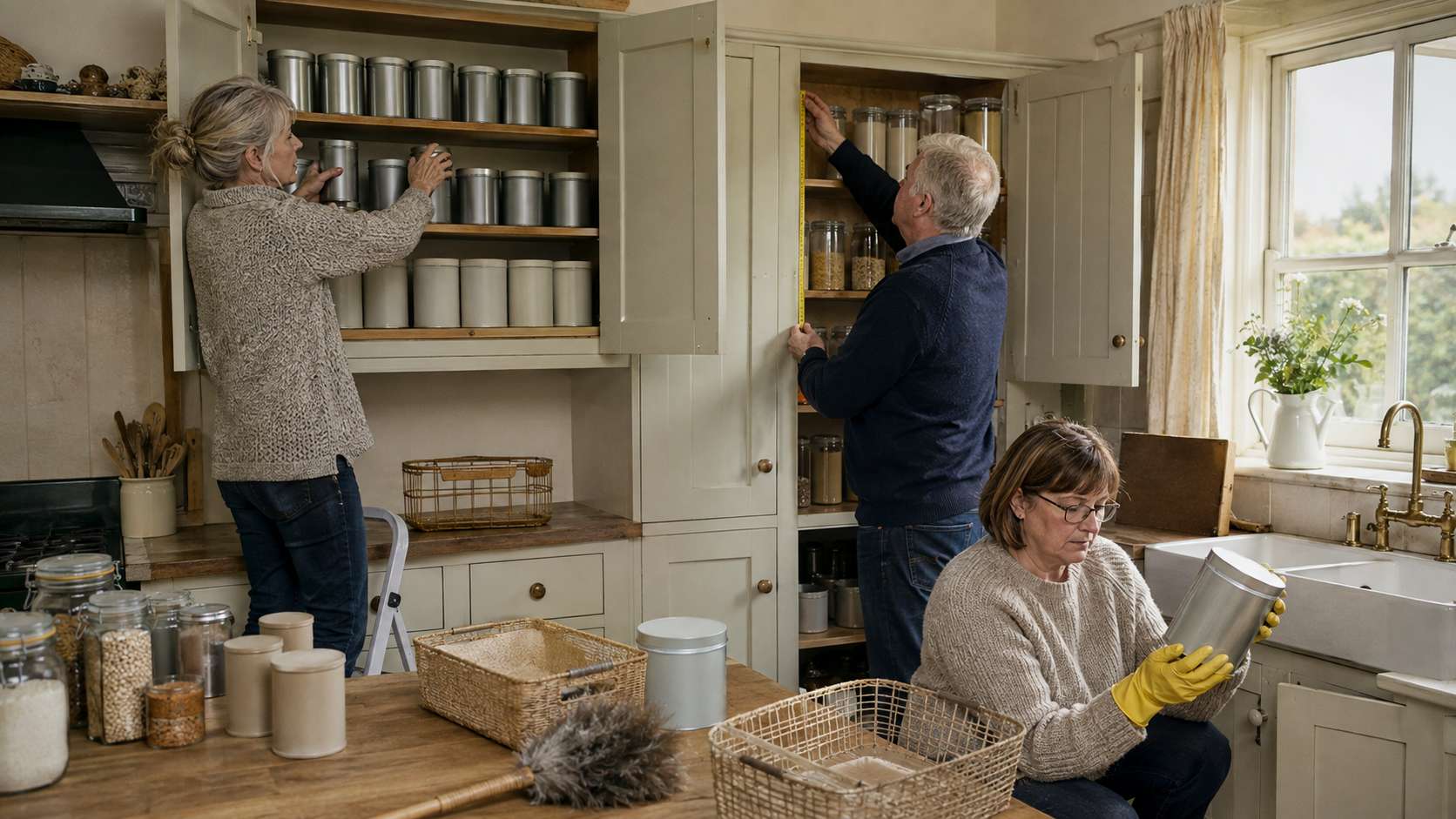
No such inspection exists. That detail did little to slow the response.
The confusion began when a message posted in a neighbourhood group advised residents to place labels facing forward and separate beans from soup before Friday. The original author later explained that the advice concerned a family visit, not government policy. By then, the message had travelled through enough group chats to acquire an official-looking heading and a reference number nobody could trace.
In Lincoln, resident Deborah Peasgood removed seventeen items from one cupboard and discovered a packet of couscous purchased during a brief period of optimism. In Spalding, Alan Treadwell arranged his tins by height, then by colour, then returned them to their original positions after deciding the new system made lunch feel administrative.
The rumour claimed inspectors would assess accessibility, label alignment and the responsible storage of emergency biscuits. It offered no explanation of who the inspectors were, how they would enter private homes or why the nation had suddenly become interested in kidney beans.
Several residents still considered preparation sensible. Cupboards were cleaned, duplicate spices were combined and mysterious jars were held up to the light. One Boston household found three open bags of flour, four nearly empty bottles of vinegar and enough stock cubes to support a small but extremely salty winter.
The greatest difficulty involved items with no obvious category. Gravy granules could sit with sauces, seasonings or Sunday equipment. Crackers appeared to belong near biscuits until somebody objected on structural grounds. A jar of capers moved six times and ended the day alone beside the fuse box.
The fictional National Cupboard Readiness Office, a name invented by residents while discussing the rumour, was soon blamed for failing to publish clear standards. A mock guidance sheet circulated recommending that pasta shapes be stored in order of emotional reliability. Penne scored well. Lasagne sheets were considered difficult to file.
Consumer advice remains straightforward. People should rely on official government websites for genuine national announcements and treat forwarded messages cautiously when they contain urgent instructions without a verifiable source. No UK rule requires households to organise food labels, disclose biscuit reserves or demonstrate competent tin rotation to a visiting official.
By Thursday evening, most participants knew the audit was fictional. Many continued anyway because the work had already reached the stage where stopping would leave every surface covered in groceries.
The exercise produced some benefits. Out-of-date items were identified, shopping lists became shorter and several people finally learned what was behind the cereal. It also confirmed that every household owns at least one ingredient nobody remembers buying but feels strangely guilty about discarding.
The original neighbourhood post has been corrected. Residents have accepted the explanation, although some believe the cupboard inspection should become real now that they have done the work.
Others are less enthusiastic. Treadwell says his kitchen will not be accepting visitors until the capers have been assigned a permanent department.
