
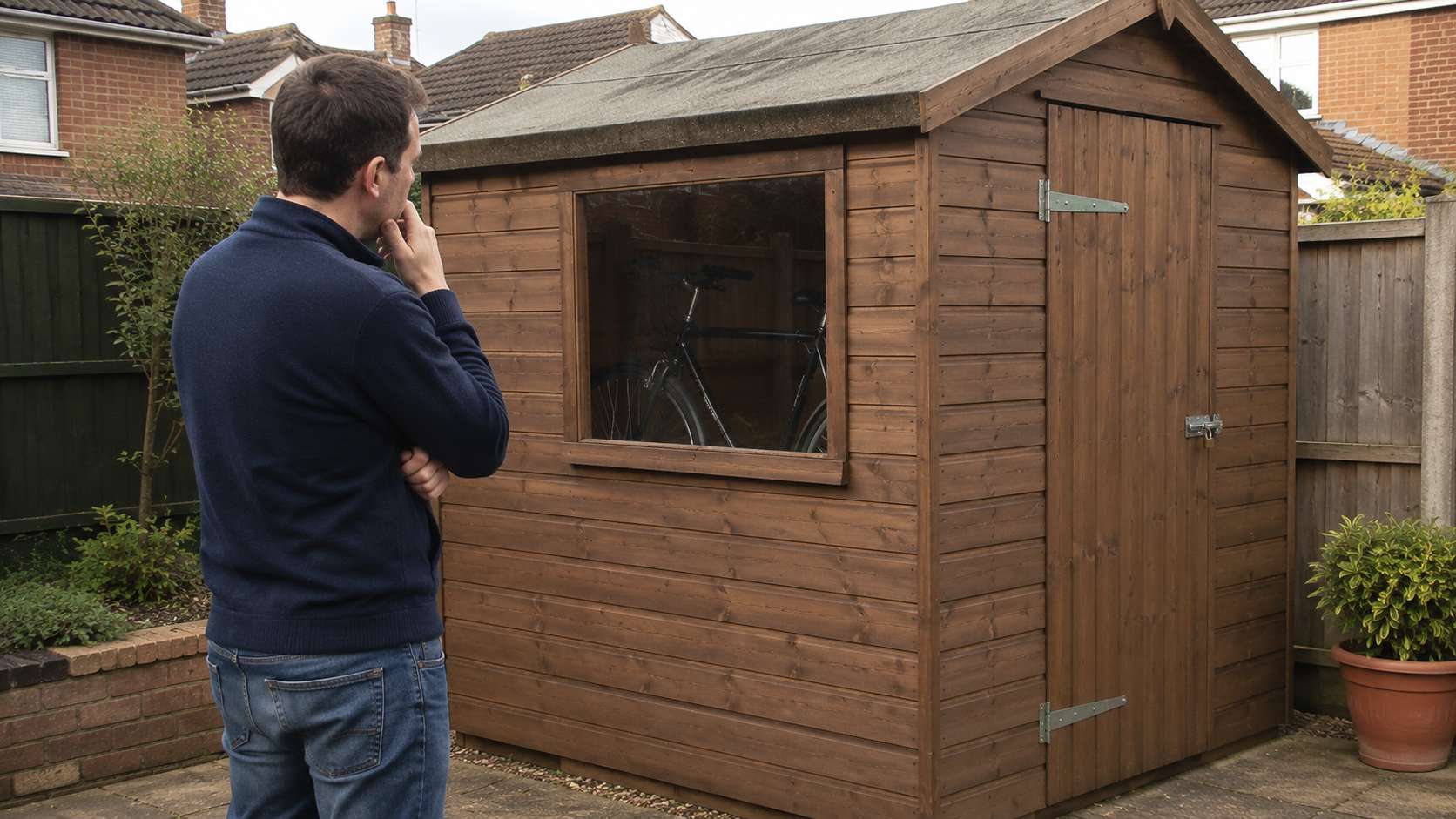
A Successful Build Reveals A Problem.
A Market Deeping homeowner completed a new garden shed before discovering that an old bicycle had been built permanently into the structure. The bike had been leaning against the fence when work began and was moved inside the frame temporarily to protect it from rain. Over two weekends, walls, shelving and a narrow doorway were added around it. The problem became apparent only when the owner tried to remove the bicycle and found the handlebars were wider than the finished exit.
The Bicycle Was Supposed To Move.
The owner remembers deciding to relocate the bike after fitting the roof. That decision was postponed while he searched for screws, corrected a shelf and made tea. By the time he returned, the bicycle had blended into the project. Tools were hung around it, boxes placed beside it and a bag of compost positioned against the rear wheel. At no stage did the bike object or draw attention to the approaching architectural difficulty.
Several Solutions Are Considered.
Initial attempts involved turning the handlebars, lowering the seat and approaching the doorway at angles normally associated with large sofas. The pedals caught on a storage rack and the front wheel struck a shelf built specifically to improve organisation. Removing the door frame would work but damage the finish. Taking the bicycle apart was also possible, although rusted components suggested it had been assembled during a more optimistic period of British manufacturing.
Neighbours Offer Advice.
The situation attracted neighbours, each arriving with a different solution and no intention of leaving quickly. One recommended cutting the handlebars, another proposed removing a wall panel, while a third asked whether the bike was actually needed. The owner had not ridden it for eleven years but became defensive at the suggestion it was unnecessary. He explained that the bicycle now represented potential fitness, emergency transport and a future restoration project.
DIY Searches Provide Mixed Guidance.
Online searches for shed door sizes, bicycle storage and how to remove trapped objects produced videos involving professional workshops and much larger gardens. None addressed a bike incorporated by accident during construction. Local DIY enthusiasts said the safest answer was to dismantle something carefully, although they disagreed about whether that should be the bicycle, shelving or shed. The owner's partner suggested leaving it and telling visitors the arrangement was deliberate.
Why The Story Matters Locally.
There is also a search-intent reason these stories travel. People look online for answers to everyday problems using direct phrases, place names and practical questions. They want to know whether others have experienced the same issue, how it was resolved and what to try next. A useful local article can meet that need while remaining entertaining, provided the relevant terms appear naturally and the information stays focused on the actual event rather than repeating keywords without purpose.
Why The Story Matters Locally.
Residents involved have asked that the matter remain in proportion. Nobody was injured, no emergency services were required and the wider economy appears stable. Even so, the event has earned a place in local memory because it combined mild inconvenience with complete confidence. That combination is common across Britain and particularly powerful in communities where somebody always knows a person who could have solved the problem earlier.
Why The Story Matters Locally.
The story also reflects a familiar feature of local life: ordinary tasks rarely stay ordinary once neighbours become involved. A quick explanation can become a detailed reconstruction, complete with witnesses, alternative theories and somebody remembering a similar incident from years earlier. That community attention is part of what makes local news useful. It records the small moments residents actually discuss at school gates, counters, cafés and garden fences.
The Bike Becomes A Feature.
For now, the bicycle remains inside and has been designated a fixed storage feature. A basket on the front holds gardening gloves, while the crossbar supports extension leads. The owner says this is efficient use of space and denies being defeated. He has also measured the doorway of the next shed before beginning work, despite having no current plan to build one.
Join The Conversation.
Have you experienced something similar in Market or elsewhere across Lincolnshire? Share what happened, how it was resolved and whether the sensible solution appeared before or after everybody had formed an opinion.
Tell Spalding News which everyday local story deserves attention next. Share this article with neighbours, friends and family who will recognise the situation immediately, even if they insist their version was much more complicated.
