A groundbreaking study has reportedly confirmed what many residents in Spalding, Lincolnshire, have quietly suspected for years - almost everyone is pretending to understand wine.
The research, conducted by the entirely respectable Institute for Advanced Beverage Interpretation, concluded that 94 percent of wine drinkers have nodded approvingly at a tasting note they did not understand, while 78 percent admitted they would struggle to identify the difference between a £9 bottle and a £90 bottle if labels were removed.
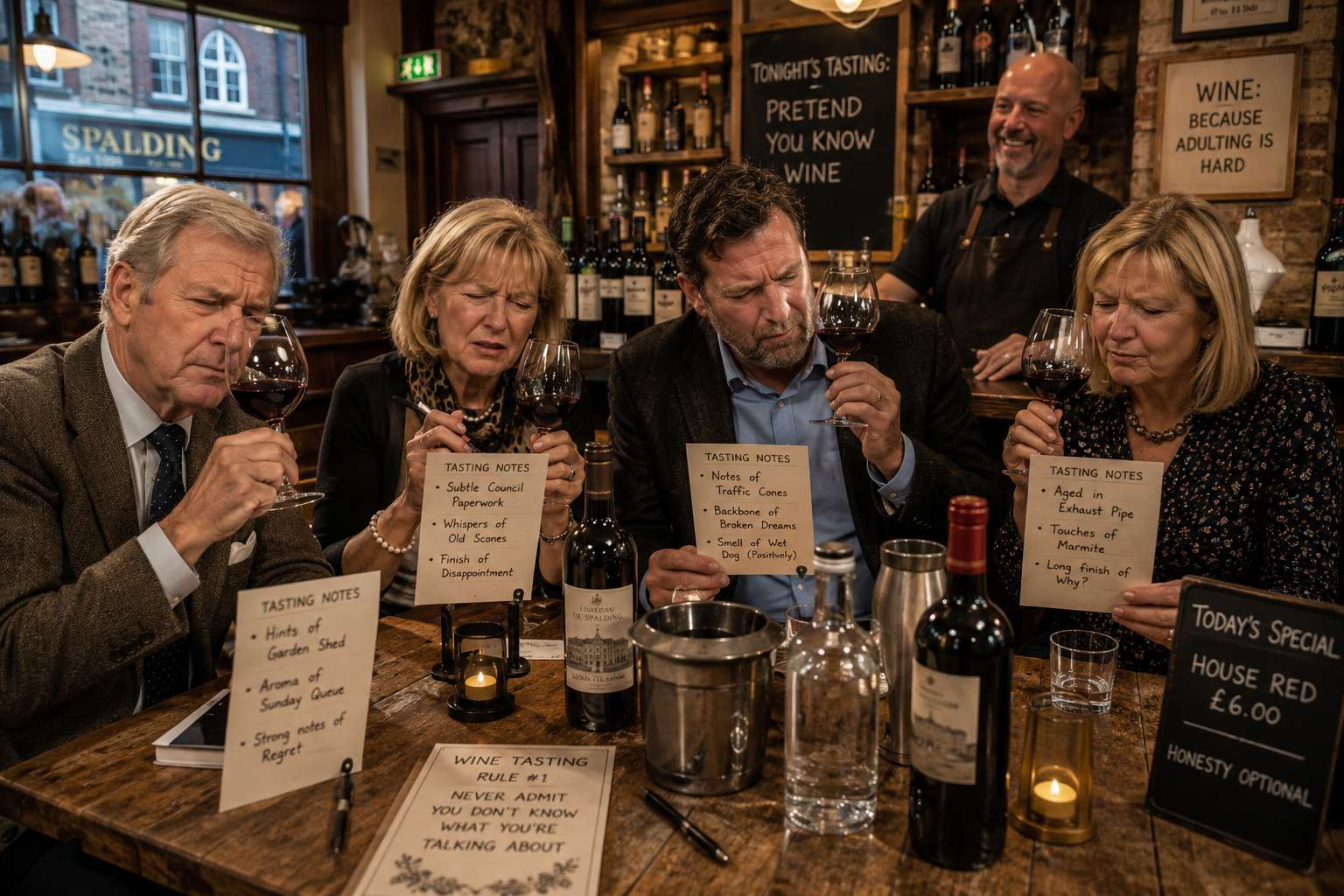
The findings have sent shockwaves through Spalding's social circles, where phrases such as "subtle notes of oak", "hints of blackberry" and "a confident finish" are regularly exchanged despite nobody being entirely sure what any of them mean.
One local resident admitted they had spent six years describing wine as "surprisingly bold" because it sounded knowledgeable and could be applied to almost any bottle.
Spalding Wine Enthusiasts Respond.
The study has prompted strong reactions across the town. Several self-described wine experts gathered to discuss the findings, with many insisting they genuinely understood wine while simultaneously referring to flavours that included pencil shavings, old library books and "the memory of a summer holiday".
One participant reportedly described a supermarket merlot as having "undertones of optimism and regional confidence".
Another praised a bottle for delivering "a strong middle section and excellent commitment levels".
Neither explanation was challenged.
Local observers noted that this is often how wine conversations progress, with increasingly creative descriptions continuing until somebody changes the subject or opens another bottle.
The UK's Love Affair With Wine Continues.
Despite the confusion, Britain's enthusiasm for wine remains strong. Industry figures suggest UK consumers drink around 440 million litres of wine annually, while average consumption remains close to nine litres per person each year.
The UK is also one of the world's largest wine importing nations, with imported products accounting for the overwhelming majority of bottles sold across the country.
Research further shows that around four in five UK adults consume alcohol, helping explain why wine remains a regular feature of dinner tables, celebrations and awkward work events.
Meanwhile, the domestic wine industry continues to grow. More than 1,100 vineyards now operate across England and Wales, producing millions of bottles annually and supporting thousands of jobs.
Experts Explain The Bluffing Phenomenon.
Behavioural experts involved in the study believe wine may be unique among consumer products because nobody wants to admit they cannot taste what everyone else claims to taste.
The report found that once a single person mentions detecting "notes of cherry", others rapidly begin discovering cherries as well. When someone identifies traces of vanilla, tobacco or leather, the group generally agrees regardless of whether any of those items have ever been near the bottle.
Researchers referred to this phenomenon as "collective grape confidence".
One experiment reportedly involved serving the same wine from three different bottles. Participants consistently described each as completely different despite all three containing identical wine.
Local Businesses See Opportunity.
Spalding businesses have reacted quickly to the findings. Several establishments are reportedly considering wine tasting evenings where participants simply invent flavour descriptions and receive points for creativity.
Early favourites include "mild undertones of council paperwork", "a lingering aroma of Sunday afternoons" and "hints of waiting for roadworks on the A16 to finish".
One organiser believes honesty could transform the industry.
"If someone likes the wine, they should just say they like it," they explained. "We don't need to pretend we're tasting antique furniture."
The Search For Honest Wine Reviews.
As debate continues across Lincolnshire, many residents appear relieved by the study's conclusions. For years, countless people have quietly wondered whether they were missing something obvious while listening to detailed discussions about tannins, structure and mineral characteristics.
The answer, according to researchers, is reassuringly simple. Nobody really knows what they're talking about, and everyone else is hoping nobody notices.
For now, Spalding's wine drinkers can relax, pour another glass and confidently describe it as having notes of whatever seems appropriate at the time.
Have you ever pretended to understand a wine tasting note just to avoid looking confused? Share the strangest wine description you've ever heard in the comments below.